

Waterproof Earbuds IP Ratings: Sweat and Water Explained
An earbud listing can read like a code sheet: IPX4 on one pair, IPX7 on another, IPX8 on the model a reviewer keeps recommending. Those characters are shorthand for how well the earbuds stand up to sweat, rain, splashes, and the occasional drop into a sink. Learning the scale takes a few minutes, and it can save you from ruining a new pair during the first week of a training routine.
Here is what each level means, which rating fits which activity, and where the marketing language gets loose with the facts.
What an IP Rating Actually Measures
An IP rating is a claim about how a device behaves when it meets water, dust, and other particles. Earbud makers usually publish it in the IPX form, such as IPX4 or IPX7, where the X stands in for the dust figure that audio brands often leave unstated. The number after the X describes water protection. The higher that number climbs, the more water pressure or depth the product survived during testing.
Two products carrying the same water number can still behave differently in real life. A rating reflects the conditions of a specific test, so two pairs of IPX7 earbuds may be built very differently even though the label matches. The number is a starting point for comparison, not a full durability profile.
It also helps to remember that a higher rating is not automatically the right purchase. If you never take your earbuds near a pool or a shower, the extra sealing on an IPX8 model may not change your daily experience, and a simpler IPX4 pair can do everything you need for the walk to work.
The IPX Scale for Earbuds, Level by Level
| Rating | Protection described | Where it fits |
|---|---|---|
| IPX4 | Splash-resistant from any direction | The most common rating on earbuds and the accepted sweat standard |
| IPX5 | Handles water jetting from a 6.3mm nozzle | Heavier sweat, quick rinsing under a tap |
| IPX6 | Handles water jets from a 12.5mm nozzle | Rain, and earbuds tested for showering |
| IPX7 | Immersion in water up to about 1 meter, roughly 3 ft, for up to 30 minutes | Accidental dunks, heavy rain, long sweaty sessions |
| IPX8 | Fully submersible up to 1.5 meters for up to 30 minutes, as typically described | The highest water protection commonly marketed for earbuds |
Notice the split in that table. IPX4 through IPX6 describe water hitting the earbuds, while IPX7 and IPX8 describe the earbuds being surrounded by water. That shift from spray to immersion matters more than the number alone.
Matching the Rating to Your Routine
The right rating depends less on bragging rights and more on the environment your earbuds live in. Three common scenarios cover most buyers.
Gym Sessions and Outdoor Runs
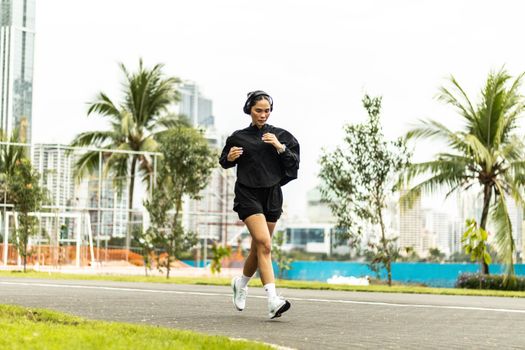
For working out, earbuds rated IPX5 through IPX7 are the practical target. That range covers the sweat volume of a long session and leaves headroom for rain or a splash at the water fountain. IPX4 works as an everyday baseline for light sweat, but if you train hard and often, a higher number gives you more margin and fewer worries about the electronics inside.
Rain, Commutes, and Everyday Use
IPX4 covers splashes from any direction, which handles most rain you would willingly walk through, plus the occasional spill on a desk. If you regularly get caught in heavy weather or cycle through it, moving up to IPX6 or beyond removes some of the guesswork.
Showers and Full Submersion
Waterproof earbuds sit in the IPX6, IPX7, and IPX8 bands. Products in that group are described as protected against sweat, rain, and full submersion. An IPX7 pair can typically sit in about a meter of water for half an hour, while IPX8 pushes that to 1.5 meters for the same duration.
Sweat and Rain Are Not the Same Test
Sweat arrives with salts and oils that dry onto the mesh, the seams, and the charging contacts. Repeated exposure without cleaning can leave residue sitting against the parts that matter, which is why a splash rating and a spotless pair of earbuds are two different things. Wiping them down after a session is part of keeping the protection meaningful.
Rain behaves differently again. It often hits at an angle, pools in the case, and comes with wind that drives droplets into openings. A rating tells you which of those scenarios the product was tested against, not how it will behave after a year of use.
Waterproof Versus Water Resistant
The two words get used interchangeably in product copy, and the difference comes down to the test behind the label. Water resistant usually points to splash and jet protection in the IPX4 to IPX6 range. Waterproof shows up around IPX7 and IPX8, where the product survived being submerged rather than merely sprayed.
Even so, no consumer earbud is waterproof in an absolute sense. An IPX8 earbud is waterproof for the conditions it was tested under: fresh water, a stated depth, a stated time. Move outside those conditions and the claim stops being meaningful.
Swimming and IP68: What to Confirm Before You Buy
An IPX8 rating does not automatically make a pair of earbuds suitable for swimming laps. Pool water carries chlorine, sea water carries salt, and the motion of a stroke pushes water past seals in ways a static immersion test does not capture. If you see IP68 on a product page, treat the water digit the same way you would treat any other rating and confirm the exact depth and duration the brand tested to, because those conditions come from the manufacturer rather than from the rating itself.
If swimming is your main goal, get the claim in writing from the brand or the retailer before you buy, and check the return window in case the pair does not perform the way the listing suggested.
What IP Ratings Do Not Cover
A rating is silent on drops, crushing, dust buildup around the drivers, and the wear that comes with months in a pocket or a gym bag. It also says nothing about how the charging case behaves, so assume the rating applies to the earbuds unless the brand states otherwise. Physical damage to the housing or the mesh can change how a seal performs, which means a scratched pair may not deliver the protection the original label promised.
Care Habits That Keep the Rating Useful
- Dry the earbuds and the case before sealing them back up, since trapped moisture sits against the contacts.
- Do not charge a pair that is visibly wet. Give it time to air out first.
- Check whether the rating covers the earbuds, the case, or both, because makers do not always apply the same protection to each part.
- Rinse away sweat and salt after heavy use, then dry thoroughly before the next session.
- Keep an eye on cracks, loose mesh, and damaged seals, since physical wear can change how the housing keeps water out.

How to Read an Earbud Listing Quickly
Start with the activity in mind, then work backwards to the rating. Occasional gym use points to IPX4 or IPX5. Serious, sweaty training points to IPX5 through IPX7. Shower use and accidental dunks point to IPX6 and above. Anything involving deliberate swimming sits outside what a standard IP rating is designed to promise, so it needs a direct answer from the brand rather than an assumption based on the number on the box.
Water Resistant Earbuds at Mobile Gadget HQ
Mobile Gadget HQ stocks audio gear alongside phone cases, chargers, cables, tablet accessories, and gaming accessories, with free shipping, international delivery, and a 60 day return policy. If you are comparing rated earbuds, the product page is the place to check the exact IP figure before you commit, since two models in the same price band can carry very different levels of water protection.
Frequently Asked Questions
Can I swim with IP68 earbuds?
An IP68 listing does not confirm that earbuds are built for swimming. IPX8 covers submersion in test conditions, typically up to 1.5 meters for 30 minutes in still fresh water. Chlorine, salt water, and the movement of a stroke go beyond that test. Confirm with the brand before trusting a pair in the pool.
Is IPX4 good enough for the gym?
IPX4 is the accepted sweat standard and the most common rating found on earbuds, described as splash-resistant from any direction. It handles ordinary gym sessions and light rain. If you sweat heavily, train outdoors in wet weather, or rinse your earbuds after use, a higher rating such as IPX5 through IPX7 gives you more margin.
Which is better, IPX4 or IPX8?
IPX8 is the higher rating. IPX4 protects against splashes from any direction, which covers sweat and light rain. IPX8 covers full submersion, typically up to 1.5 meters for up to 30 minutes. Choose IPX4 for normal workouts and commuting, and look higher if you want protection against dunks, heavy rain, or shower use.
Do 100 percent waterproof earbuds exist?
No earbud is waterproof in an absolute sense. An IPX8 rating describes submersion under specific test conditions, generally up to 1.5 meters for up to 30 minutes in fresh water. Outside those conditions, including deep water, salt water, or a chlorinated pool, the rating no longer tells you what the earbuds will survive.

