

Portable Charging Solutions for Phones and Tablets
A low battery can interrupt a commute, a meeting, or an afternoon of photos and messages. Portable charging solutions solve that by storing electricity in a device you can bring along. Instead of searching for a wall outlet, you connect your phone or tablet to a charged battery that fits your day. These solutions range from small power banks to higher-capacity power stations and even rental kiosks offered in public spaces.
Phones and tablets hold the tools many people rely on all day, including maps, boarding passes, tickets, and work files. When that screen dies, everything else stalls. Understanding the basics of portable charging helps you pick a product that matches your devices, your schedule, and the places where you actually need power.
What Are Portable Charging Solutions?
A portable charging solution is any device or service that lets you recharge your electronics without plugging them directly into a wall socket. The most common option is a power bank, which is a small, portable charger that can power up your smartphone, tablet, or other USB-charged devices when you are away from an outlet.
Beyond power banks, the category includes larger portable power stations that provide more capacity and can support laptops and other gear. There are also public charging kiosks where people rent a portable charger on the go and return it later. Each type serves the same goal, but the products differ in size, output, and how they are used.
Main Types of Portable Charging Solutions
The right choice depends on how much power you need and how you prefer to carry it. This table summarizes the main options.
Type |
What it is |
Best suited for |
|---|---|---|
Power bank |
A small, portable charger that powers smartphones, tablets, and other USB-charged devices |
Daily pocket carry and quick top-ups when no outlet is nearby |
Portable power station |
A higher-capacity battery unit that can handle phones, laptops, and occasionally small appliances |
Longer trips, outdoor use, and charging several devices at once |
Rental kiosk |
A user-friendly station where people rent a portable charger and return it at another location |
Days when you forgot your own battery and need power on demand |
Power Banks for Phones and Tablets
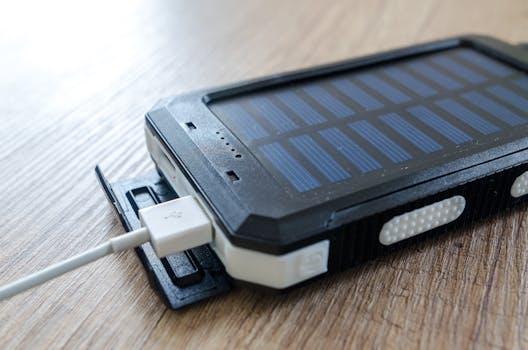
A power bank is often the first portable charging solution people buy. It stores electrical energy in a compact case and releases it to your device over a cable. Because power banks are small, they fit comfortably into a backpack, purse, or jacket pocket and provide a convenient safety net for phones and tablets.
Most power banks are recharged from a wall outlet, so you can top them up at home or in a hotel room before heading out. Once charged, they can revive a phone several times depending on the bank's capacity and the size of your device's battery.
In a hands-on roundup that tested a dozen portable chargers, the Anker MagGo Power Bank 10K Slim proved to be the most effective model. Testers noted that it snapped securely onto the back of a phone and stayed comfortable while charging, which is useful when you are using your phone for directions, photos, or messaging on the move.
Retail rankings also point to popular options. Amazon's best sellers list for cell phone portable power banks was led by the INIU 10000mAh 45W Fast Charging Portable Charger, which includes a detachable USB-C cable. A detachable cable means you do not need to carry a separate cord, and the 45W fast charging output supports modern phones and tablets that can handle quicker power delivery.
What to Look for in a Power Bank
Capacity is the first spec to check because it determines how much power the bank can hold. Charging speed and the number of output ports also matter if you plan to charge more than one device. A built-in or detachable cable adds convenience by removing the risk of forgetting a cord at home. Consider the phone and tablet you carry daily, then choose a power bank that can realistically cover a full day of use.
Portable Power Stations: When One Battery Isn't Enough
Portable power stations give you more capacity than a typical pocket-size power bank. These larger units are useful for road trips, remote work, camping, or any situation where you need to charge a phone, a tablet, and possibly a laptop at the same time. Portable battery packs that are recharged from a wall outlet can revive dying phones and laptops, and occasionally even small appliances.
The main difference between a power station and a power bank is the amount of stored energy. A power station is bulkier and heavier, but it can support heavier charging loads for a longer period. If you are coordinating a group trip or working outside for several days, the extra capacity can make the difference between a productive day and a stack of dead devices.
Recharging a Portable Power Station
Portable power stations can be recharged three ways. An AC wall outlet provides the fastest charge, which makes it the best option when you have access to a building. A car 12V socket lets you add power while driving, and solar panels offer a useful alternative when you are outdoors with no wall power available. Think about which of these methods fits your routine before choosing a station.
Portable Charger Kiosks and Rentals
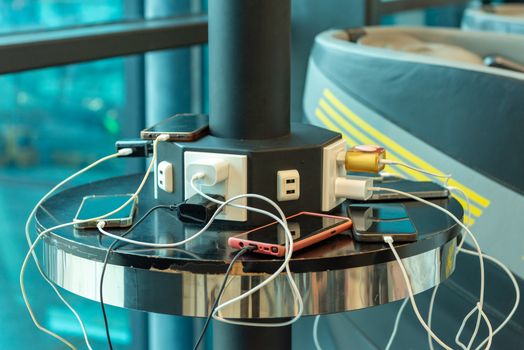
Not everyone wants to carry a battery every day. Portable phone charging station kiosks offer a different kind of portable charging solution. These kiosks are designed to be user-friendly, allowing people to rent portable chargers on the go and return them at various locations nationwide. You can pick up a charger when your phone is low and drop it off later, which takes the worry out of a dead battery while you are out.
Businesses can also offer charging as a service to customers. ChargerGoGo, for example, describes its stations as plug-and-play and cloud-connected, which simplifies setup and management. Its GoGo Launch Max bundle includes 20 phone chargers, 160 batteries, a welcome package, and display stands with mounts. The total price is $15,057.55, the total value is $23,000.80, and the per-unit price works out to $752.88. That kind of turnkey bundle suits venues where guests regularly need power.
Rental kiosks are most useful in public spaces where people tend to spend time away from an outlet. For frequent travelers, knowing that a rental location exists nearby can be just as reassuring as carrying a personal power bank.
How to Get the Most from Portable Charging Solutions
Portable charging works best when you build simple habits around it.
Recharge your power bank or power station from an AC wall outlet before a trip, since this is the fastest way to fill its battery.
Use a car 12V socket while you drive so your portable charger gains power without adding time to your journey.
Consider solar panels for outdoor use where no wall outlet is available.
Choose a model with a detachable cable, such as a USB-C option, so the right connection is always ready for your phone or tablet.
Match capacity to your devices. Tablets and laptops draw more power than phones, so heavy users should size up to a higher-capacity solution.
Stored energy is only useful if the portable charger itself has power left. Topping up your charger overnight is a small habit that keeps it ready when you reach for it.
Frequently Asked Questions
What is the difference between a power bank and a portable charger?
A portable charger is the broader term for any battery-powered product that can recharge a device away from a wall outlet. A power bank is one type of portable charger: a small, portable unit designed to power smartphones, tablets, and other USB-charged devices. Larger portable power stations also count as portable chargers. In everyday conversation, people usually mean a power bank when they say portable charger.
Can a portable power bank recharge a tablet as well as a phone?
Yes. A power bank is a portable charger that can power up a smartphone, tablet, or other USB-charged devices when you are away from an outlet. Larger portable power stations can go further and may handle laptops or occasionally small appliances. Before connecting a tablet, check that the charger has enough capacity and that you have the correct cable for the device's charging port.
How do you recharge a portable power station?
Portable power stations give you more capacity and can recharge three ways. The fastest option is an AC wall outlet. You can also charge from a car 12V socket while driving, or use solar panels when you are outdoors. Planning your recharging method ahead of time ensures the station is ready when your phone or tablet needs it most.
How do portable phone charging kiosks work?
Portable phone charging station kiosks are designed to be user-friendly. People rent a portable charger on the go and return it at various locations nationwide. Providers such as ChargerGoGo describe their stations as plug-and-play and cloud-connected, which helps businesses manage them with less complicated installation. For travelers, rental kiosks are a practical backup when you do not have your own battery with you.

